Materials
Inside Dokra: From Heritage Craft to Wearable Artifacts
Explore Seijaku’s dokra brooches—handcrafted in Bengal using ancient lost-wax casting. Discover wearable heritage, summer-inspired handfan designs, and mindful rituals shaped by craft, culture, and quiet living.
Inside Dokra: From Heritage Craft to Wearable Artifacts
There are objects that belong to time—and others that seem to carry time within them. Dokra is one such practice. An ancient metal casting technique, shaped through patience rather than precision, where nothing is repeated exactly and nothing is without trace. Each piece begins in wax and passes through fire, arriving as something both raw and resolved.
At Seijaku, this dokra craft finds a quieter extension—not preserved behind glass, but translated into objects to be worn, carried, and lived with. The movement is subtle: from artifact to adornment, from heritage to everyday presence.
The Timeless Language of Dokra Craft Dokra is among the oldest known metal casting traditions, with origins tracing back over 4,000 years. The process—lost-wax casting—remains largely unchanged.
A form is first sculpted in beeswax. It is encased in clay. Heat removes the wax, leaving behind a hollow. Molten brass is poured in. The mold is broken. It is a method that resists duplication.
No two dokra pieces are identical. Each carries small asymmetries, textural variations, a certain tactile honesty that cannot be engineered. This is what defines handmade dokra jewelry and artifacts—the presence of the hand remains visible.
Across India, dokra has appeared in ritual objects, ornaments, and tools. In Bengal, particularly in artisan clusters around Kolkata, the practice continues—sustained through memory, lineage, and repetition rather than machinery.
Dokra in Bengal Today And yet, despite its history, dokra survives in fragile conditions. Bengal artisans continue to work with wax, clay, and fire in modest workshops, often with limited access to wider markets. The process remains labour-intensive—each wax form shaped by hand, each mold built layer by layer, each casting dependent on timing and control.
It is slow work, and increasingly rare.
Seijaku’s engagement with dokra began not with intervention, but with attention. Through direct collaboration with artisan clusters, the intention was to explore how this heritage craft could find continuity—without losing its internal logic.
The result was not replication, but adaptation.
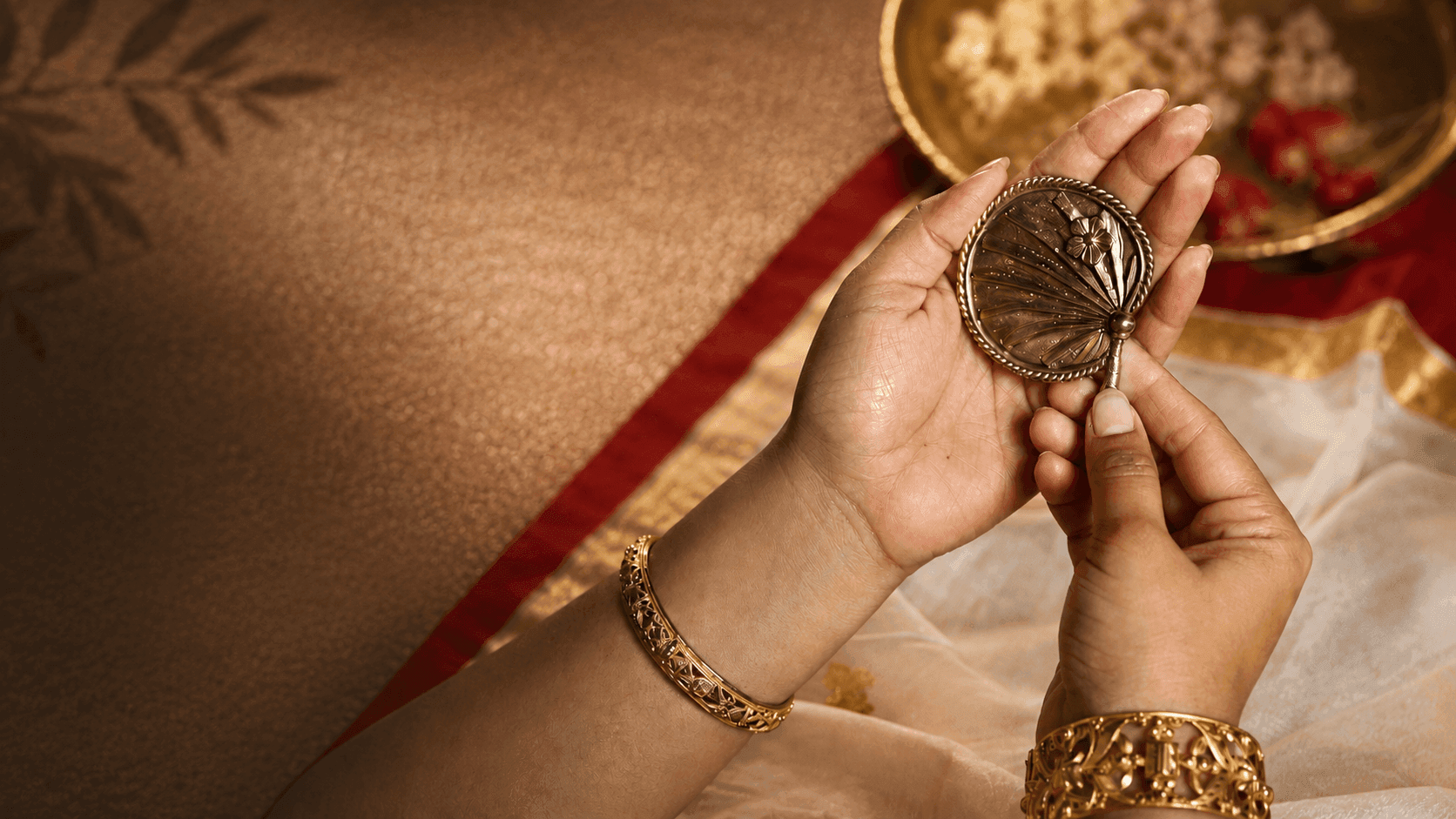
Dokra Handcrafted Brooches: Wearable Heritage The first collection introduces dokra handfan brooches—small, wearable brass artifacts that draw from both Bengal’s visual language and a quieter, Japanese restraint.
Each handmade brass brooch is cast using the traditional lost-wax method, then finished to retain its textured surface. Lightweight yet grounded, they are designed to sit on silk scarves, cotton garments, or structured lapels.
The form echoes the handfan—an object associated with air, stillness, and movement without urgency.
In summer, this reference feels less symbolic and more intuitive. The arc of the form, the suggestion of unfolding, the sense of held breeze—each piece gestures toward something felt rather than seen.
Future explorations extend into other motifs—conch forms, temple bells—each carrying its own spatial and cultural resonance. Not as statements, but as quiet continuities.
From Craft Object to Personal Ritual Every dokra piece retains evidence of its making. Edges remain slightly irregular. Surfaces resist polish. Over time, the brass deepens, developing a natural patina that alters tone and texture.
These are not imperfections. They are the record of process. When worn, the object shifts again. A dokra brooch—pinned to a saree, a scarf, a jacket—becomes part of movement. Not decorative alone, but grounding.
There is also a parallel inquiry emerging. Forms such as the fan or bell have begun to influence how we think about scent—how objects might extend into atmosphere. Future Seijaku compositions will explore this relationship, where material and fragrance exist in quiet dialogue.
Why Wearing Dokra Matters To wear dokra is to participate in its continuity. Each piece sustains an ecosystem—of artisans, of material knowledge, of processes that resist acceleration. This is not preservation as concept, but as practice.
In contrast to mass production, dokra introduces a different rhythm. It asks for time—in making, and in use.
A handmade dokra brooch, in this sense, is not simply jewelry. It is a small alignment—with craft, with culture, with a slower way of holding objects.
Process, Collaboration, Continuity Seijaku’s work with dokra artisans remains ongoing, shaped through dialogue rather than instruction. Designs begin as references—historical forms, natural structures, everyday gestures. These are interpreted in wax by artisans, where proportion and texture are resolved through experience rather than blueprint.
From there, the process unfolds as it always has: clay, fire, brass, release. Each stage leaves its mark. In developing these wearable artifacts, attention was given to balance—ensuring that the pieces remain light enough for daily use, while retaining their sculptural integrity. Not seasonal objects, but responsive ones.
Care for Dokra Brass Jewelry
Dokra evolves with time. The brass will darken, developing a richer patina. This is not degradation, but depth.
To care for your dokra jewelry: Store in a breathable fabric pouch Avoid prolonged exposure to moisture Clean gently with a dry cloth Use anti-tarnish sparingly, only if you wish to retain the original tone Handled with care, these pieces do not wear out. They settle in.
There is a certain quietness to objects made this way. They do not insist on attention. They do not resolve themselves immediately. And yet, over time, they remain— as texture, as weight, as something held between memory and use.