Informative, DIY
How to Scent Textiles Safely and Beautifully with Seijaku Oils
Discover Seijaku's guide to scenting silk scarves, pocket squares, and cambric cotton napkins with oil-based perfumes for safe, long-lasting aroma. Achieve deeper absorption and personal calm without skin irritation.
How to Scent Textiles Safely and Beautifully
There are certain scents that refuse to remain where they are first placed. They travel—through memory, through gesture, through the quieter intervals of a day. At Seijaku, fragrance is not only something you wear. It is something you remain in, and return to.
When oil-based perfumes meet natural textiles—silk, cotton—their behaviour shifts. They do not rise immediately and disperse. They settle. They move with the fabric, releasing themselves gradually, almost in hesitation. Where skin amplifies and lets go, textiles hold and soften.
In this shift, scent becomes less about projection and more about proximity. Not something announced, but something encountered—unexpectedly, and often at close range.
Why Fabric Holds What Skin Cannot Skin is in constant negotiation with the environment. It warms, breathes, renews itself. Fragrance, in response, becomes volatile—alive, but fleeting.
Textiles behave differently. Silk scarves, cotton napkins, pocket squares—these are structured through fine, porous weaves that receive rather than resist. Oil settles within these fibers, held in place, releasing itself slowly over time.
Seijaku’s formulations are composed with this interaction in mind. They absorb into fabric without disturbance—no staining, no abrupt diffusion.
What remains is a scent that stays closer. Not worn, exactly—but carried.
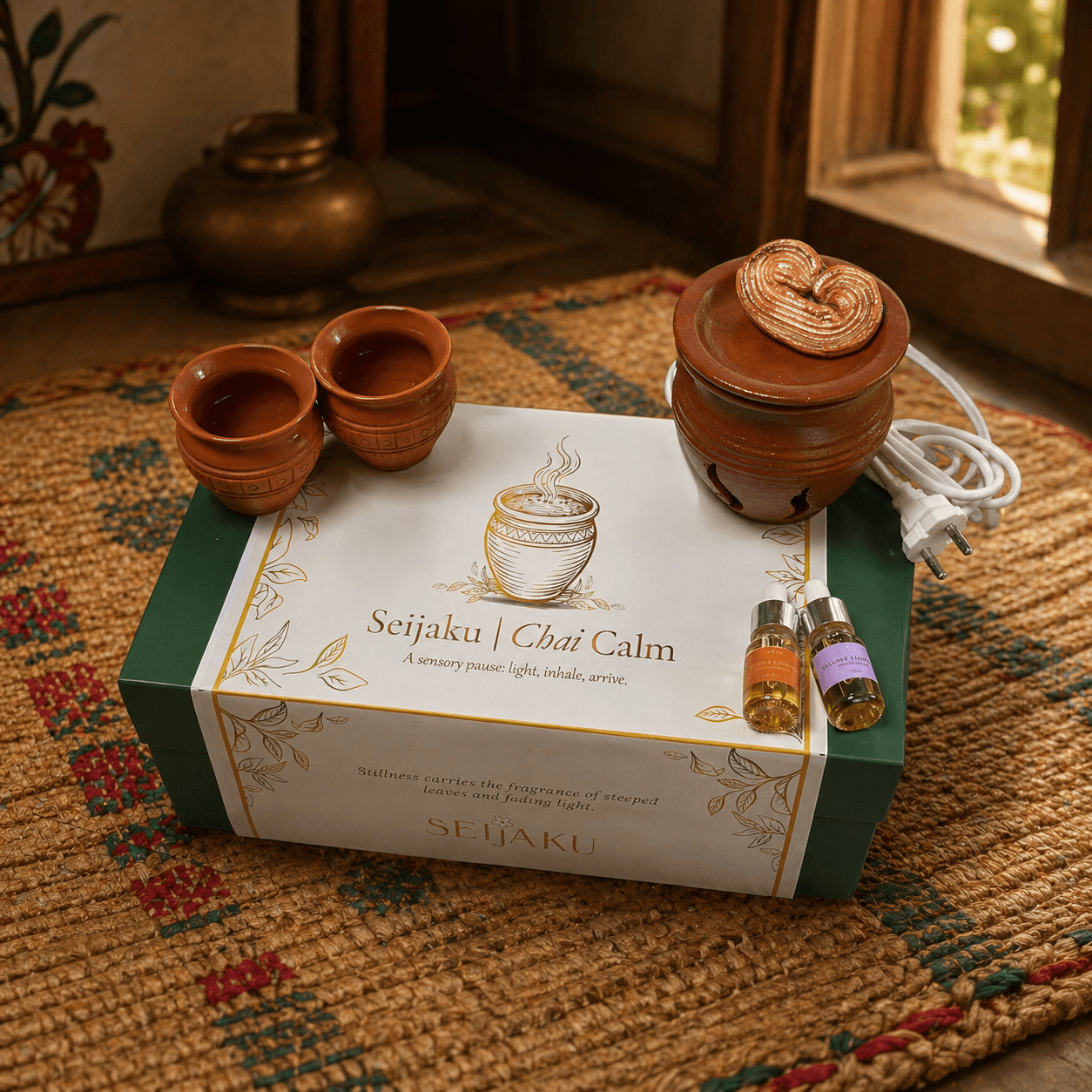
On Seijaku’s Fragrance Oils Each oil exists within a wider sensory language—alongside terracotta, dokra, objects shaped by hand and time. But they are not confined to space. They extend into what you wear, what you keep close.
They are particularly suited to delicate textiles—silk that folds easily, cotton that breathes. The viscosity allows for restraint: a drop that spreads without excess, that settles without residue. The compositions themselves avoid sharpness. Warmth, softness, a certain grounded continuity—nothing that arrives too quickly.
On fabric, this evolution slows further. The scent does not unfold all at once. It responds—to movement, to air, to proximity—becoming less a layer and more a rhythm you begin to recognise.
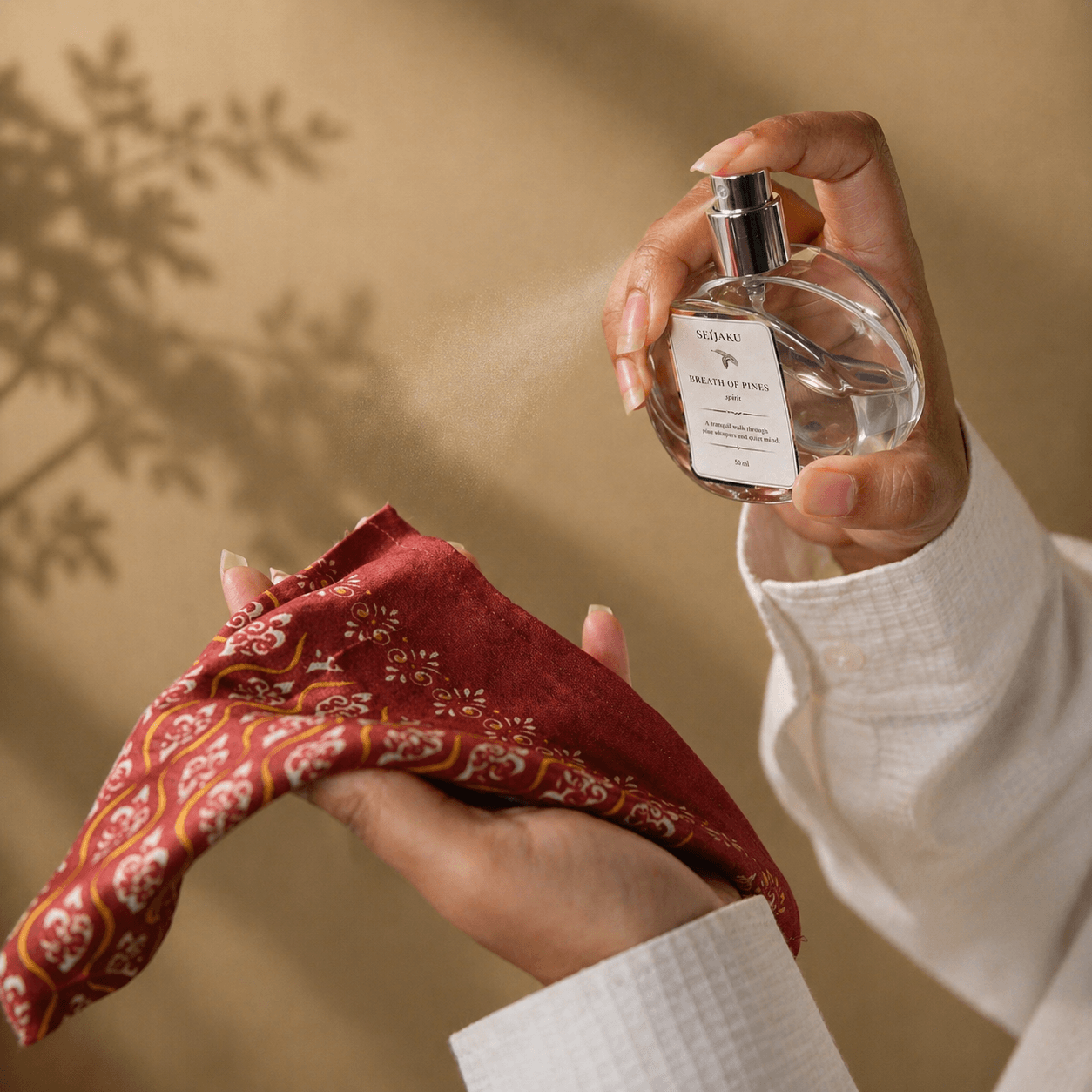
A Method, Kept Simple The act itself asks for very little, but benefits from attention. Choose a textile—something natural, something already part of your day. If unfamiliar, begin at the edge. Let the fabric reveal how it receives. Apply sparingly. One or two drops, placed—not spread. Then press. Not to force absorption, but to allow it. Let it rest, briefly. A few minutes is enough. After that, nothing changes outwardly. You fold, tie, carry as you normally would. Only the experience shifts—gradually, almost imperceptibly at first.
Where It Begins to Matter A scented textile rarely announces itself. It returns instead—in fragments. In a pause between tasks. In the movement of a scarf. In the quiet of an evening cup of tea. Not strong enough to interrupt, but present enough to anchor. This is where scent moves into ritual—not as addition, but as reinforcement. Something that gathers meaning through repetition. A scarf scented in the morning may remain with you into the afternoon, unchanged yet evolving. A cotton napkin at day’s end may carry a trace that feels already familiar. Small gestures, but cumulative.
On Care and Continuity To preserve both fabric and fragrance, restraint matters. Store textiles where they can breathe. Avoid enclosing them too tightly, or exposing them too long to direct light. Let both material and scent retain their character without interference.
Reapply only when necessary. Often, less frequently than expected.
And when paired—with space, with diffused fragrance, with the objects that surround you—the experience becomes more cohesive, though never overwhelming.
Scent, when approached this way, does not disappear. It recedes, and returns. In the fold of fabric, in the nearness of use, it remains—quietly, and without insistence.